
Treatment Type
Diagnostic patch testing for delayed contact hypersensitivity
Diagnostics
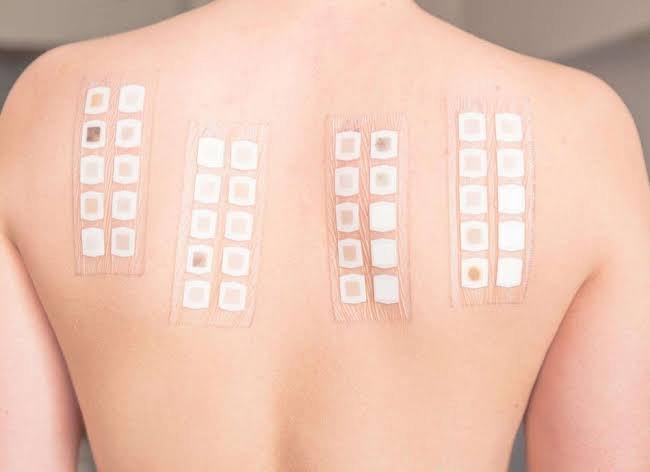
Patch testing is a way to look for delayed contact allergy by applying standardised substances to the back and reading the skin later. It is used for suspected allergic contact dermatitis, not for every itch and not as a food-intolerance panel. At Prohealth Care Clinic in Chakan, Pune, the test is planned after a history of products, work exposures, and the rash pattern.
Treatment Type
Diagnostic patch testing for delayed contact hypersensitivity
Consultation
Rash history, occupation, and product mapping before any panels
Treatment Area
Usually the back, kept dry for the test window
Individual Assessment
Whether dermatitis is contact, atopic, or another diagnosis
Allergy Patch Test in Pune is worth doing when a rash keeps returning in the same pattern—eyelids, hands, under a watch, after a new dye—and ordinary treatment only quiets it briefly. Contact allergy is a delayed, T-cell process. It is not the same as an immediate peanut or penicillin scare, and it is not diagnosed by a random IgE blood bundle sold as ‘allergy testing’.
A consultation maps the job (cements, cutting oils, hairdressing, healthcare gloves), hobbies, and leave-on cosmetics. The back must be clear enough of rash and strong steroids for a valid test; sometimes the test is deferred. You will be told not to wet the patches, not to exercise into a sweat if that was advised, and to return for readings because a day-two look is not the whole story.
Allergens in a standard series can include metals, fragrances, preservatives, and rubber chemicals, among others. Additional series can be considered for specific jobs. A positive reaction is a small patch of eczema at a site. Interpretation needs a clinician: a positive nickel test matters if you wear cheap jewellery; it may be less relevant if the rash is only on the scalp from a dye.
Results are a map for avoidance, not a personality report. False negatives and irritant reactions exist. Aftercare of the back is simple; the harder work is reading labels and workplace material safety information with guidance. The clinic will not claim a complete list of everything you can never touch again without context. Cement, epoxy, cutting fluid, hair dye, and cheap metal jewellery all appear in contact stories from Pune’s mix of industry and beauty work. A patch test is only useful if you can keep the back dry and return for readings. Missing the last reading to save a day of leave can miss a late positive and waste the whole effort.
These points are educational. They are not a diagnosis. Suitability is decided after consultation.
Especially in wet work or with gloves, contact allergy is a common question.
Leave-on products are frequent culprits worth testing when the story fits.
Rashes that improve on holiday and flare at work may be occupational contact dermatitis.
When history suggests a hidden allergen such as a preservative, testing can be discussed.
Select a step. The sequence is typical; your visit may differ after assessment.
The rash timeline, products, and job are recorded. Immediate allergy misconceptions are corrected.
Points below describe the nature of care. They are not a promise of a particular result.
When relevant, you get a chemical or product class to avoid.
Not every wet-work rash is allergy; testing and history together help.
A result can support a conversation about gloves or alternatives.
You can drop a fragrance mix rather than throwing every cream away blindly.
You are steered away from tests that do not diagnose contact dermatitis.
Bring product lists and ingredient photos if you have them. Mention if you are on oral steroids or immunosuppressants. Wear a shirt that opens at the back easily.
Immediate hives and food anaphylaxis are different pathways. Patch tests are for delayed contact.
Active eczema on the back, recent sunburn, or strong topical steroids can invalidate results.
Systemic immunosuppression can blunt reactions; timing is discussed.
Elective testing may be deferred; the clinician will advise.
You will need more than one visit for a proper reading. Skipping the last reading can miss a late reaction.
Not every test is positive, and not every positive is relevant. Interpretation is the medical part.
The number of sessions varies depending on individual factors and the treatment plan—here ‘sessions’ means scheduled reading visits plus any extra series, not a purchased package of strips.
General educational guidance only. Follow the instructions given at your consultation.
The clinician will say how long. Do not stop all eczema care on the face without a plan.
No swimming, and careful bathing as instructed.
Visits start with listening and examination so options match your concern, not a preset package.
Plans are discussed after assessment. What is suitable for one person may not be suitable for another.
Hair, skin, aesthetic, laser, nail and diagnostic options are available in one clinic setting.
Care is provided at Prohealth Care Clinic in Chakan, Pune, with follow-up as part of ongoing support.
Available options, typical process and expected care are explained before you decide how to proceed.
Allergy Patch Test in Pune is a diagnostic search, not a spa add-on. A Skin Specialist in Pune at Prohealth Care Clinic in Chakan can decide if your rash even fits contact allergy. A Skin Clinic in Pune that explains the difference from food IgE tests is educating you properly.
A Dermatologist in Pune will also look at occupational exposures common in Chakan’s industrial belt—cements, oils, and gloves. Reading visits are easier when the clinic is local.
Choose a Skin Specialist in Pune who interprets relevance, not only a sheet of plus signs. A Skin Clinic in Pune should schedule proper readings rather than a single same-day glance. That discipline is what makes patch testing worth the leave you take, especially if cement, oils, or dyes are part of a Chakan workday.
It is a diagnostic test in which potential contact allergens are applied to the skin, usually the back, and read over subsequent visits for delayed allergic reactions.
People with suspected allergic contact dermatitis—patterned eczema linked to products, metals, or work—may consider it after consultation.
Allergens stay in contact with the skin for a planned time. The clinician reads eczema at those sites and judges relevance to your exposures.
Patch-test planning is available at Prohealth Care Clinic in Chakan, Pune.
Treatment cost depends on individual requirements and treatment planning. Contact the clinic for consultation and current pricing.
FAQs
Yes. The test is useless if the diagnosis is not contact dermatitis or if the back is not ready.
Speak with Prohealth Care Clinic about allergy patch test and other skin, hair or aesthetic concerns. A consultation is the starting point for any plan.
Adityavardhan Heights, Shikrapur Road, Chakan, Pune 410501
Appointments
Request a visit and we will open WhatsApp with your details so the clinic can confirm a slot. Prior appointments are recommended; walk-ins depend on availability.
Clinic
Adityavardhan Heights, Shikrapur Road, Chakan, Pune 410501
Monday to Saturday, 10:00 AM to 8:00 PM
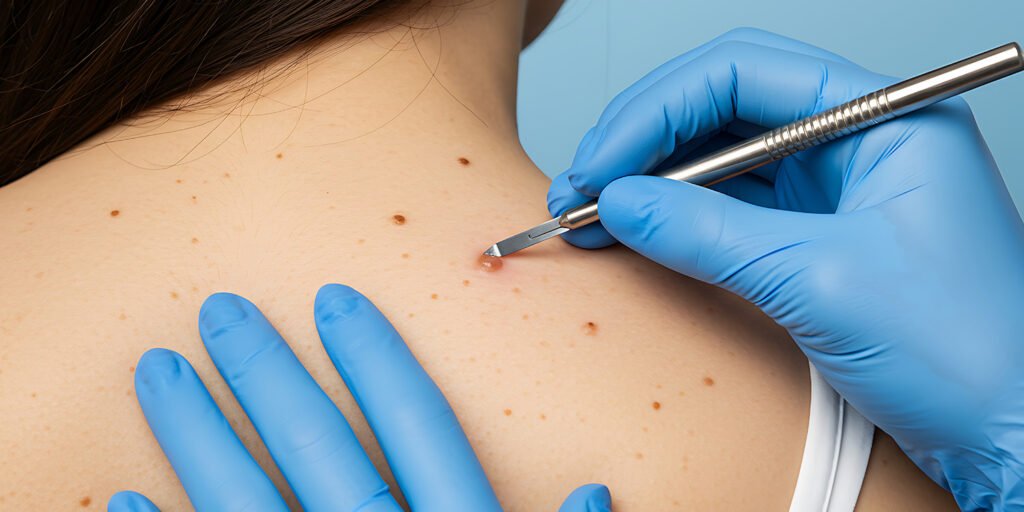
Clinic sampling of skin for histopathology when examination alone is not enough, with wound care and result review.
Learn More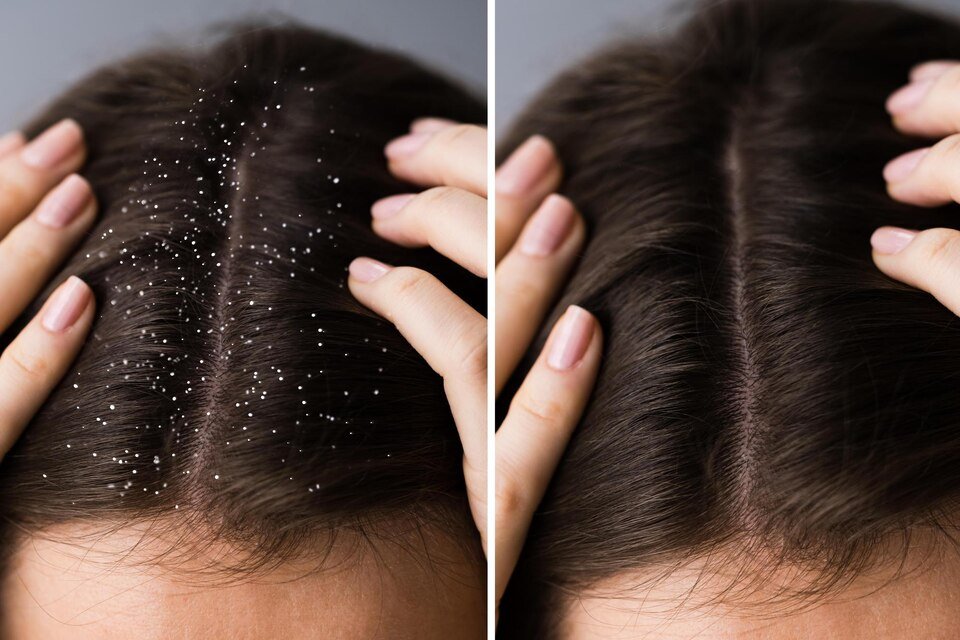
Assessment-led care for scalp flaking and related itch, with products and routines chosen after examination.
Learn More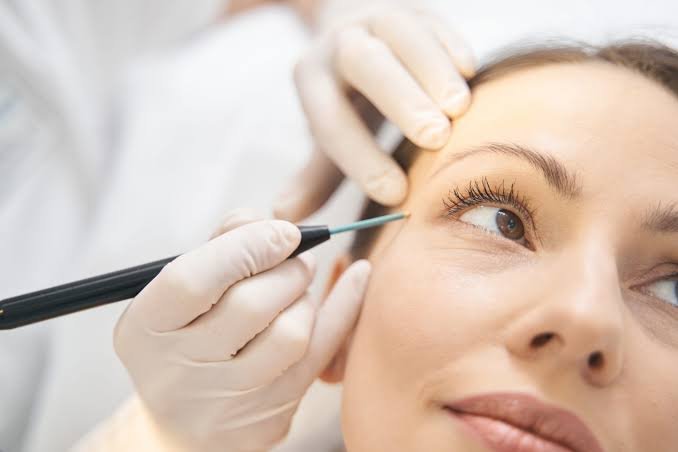
Clinical mole evaluation with optional removal and laboratory testing when the lesion or the patient needs it.
Learn More
Clinic ear piercing with medical assessment of site, keloid risk, and aftercare, when appropriate.
Learn More